
Pickleball is becoming increasingly visible across Metro Manila, with more courts, clubs, and recreational spaces giving city residents another way to stay active and spend time with friends.
What was once a relatively unfamiliar sport to many Filipinos is now finding a growing audience in the Philippines. Courts are appearing in commercial spaces, neighborhoods, and dedicated sports facilities, while tournaments and local communities are helping introduce more people to the sport.
The trend is also becoming part of a broader shift in how people use urban spaces. For many city residents, recreation is no longer limited to traditional gyms or established team sports. Pickleball offers another option that combines physical activity with a social experience.
Pickleball Is Growing Beyond a Niche Sport
Pickleball has been gaining attention in the Philippines in recent years, and its presence in Metro Manila is becoming increasingly difficult to miss.
A 2025 Metro.Style feature highlighted several pickleball courts around Manila, reflecting the sport’s growing availability in the capital. What was once something that people might have encountered only occasionally is now becoming more accessible to residents looking for places to play.
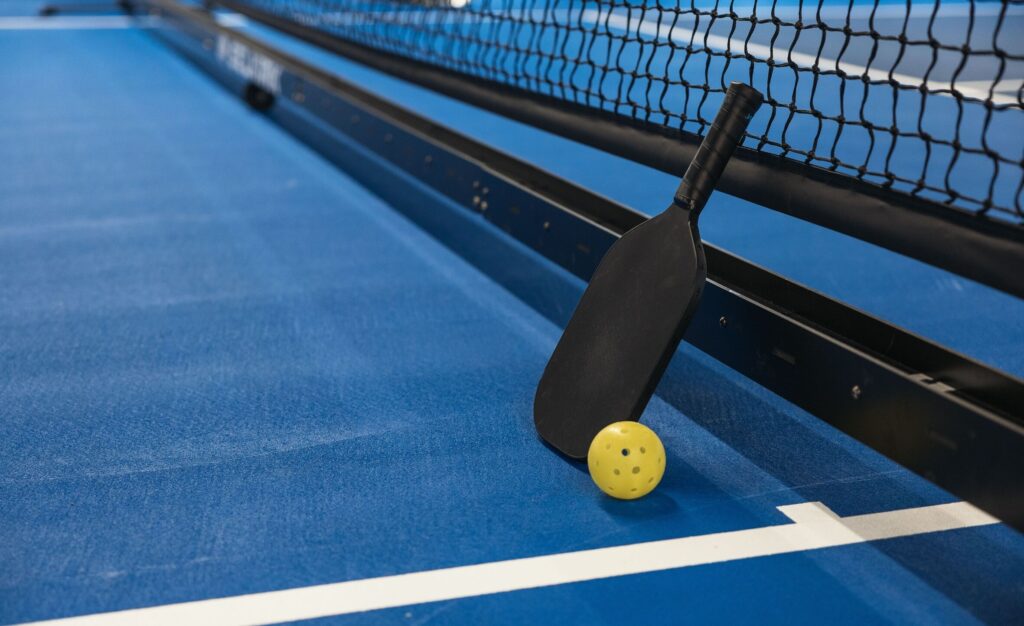
The sport combines elements familiar from tennis, badminton, and table tennis, but is played on a smaller court with a paddle and perforated plastic ball. Its relatively compact playing area makes it suitable for a variety of recreational facilities, including spaces that may not be large enough for a full-sized tennis court.
As more facilities make courts available, the barrier to trying the sport becomes lower for city residents.
More Courts Are Appearing Around the City
The growth of pickleball can also be seen in the increasing number of facilities offering courts.
SM Supermalls reported in June 2026 that it had expanded to 86 pickleball courts across 29 malls nationwide. Several of its pickleball activities and tournaments have also been held in Metro Manila locations, including SM City Bicutan, SM City Sta. Mesa, SM City Marikina, and SM Center Muntinlupa.
The development is significant because malls are already among the most accessible public spaces in many Philippine cities.
By placing courts in or near places people already visit, pickleball becomes easier to incorporate into an ordinary weekend or after-work routine.
Instead of traveling specifically to a sports complex, residents may be able to combine playing pickleball with errands, dining, shopping, or meeting friends.
The Sport Fits the Social Side of City Living
One reason pickleball has attracted attention is that it is not purely about exercise.
Games can be played recreationally, making it possible for beginners to participate without necessarily having the same level of athletic experience as more competitive players. Doubles play also naturally creates opportunities for interaction among players.
That social component has helped pickleball develop communities around courts.
For city residents who spend much of their time working, studying, or commuting, recreational activities that allow them to exercise while also meeting other people can become an appealing part of their routine.
The sport therefore fits into a larger urban lifestyle in which fitness and social interaction increasingly overlap.
Pickleball Can Be an Accessible Way to Stay Active
Another part of its appeal is the relatively approachable nature of the game.
Pickleball does require movement, coordination, and quick reactions, but its smaller court can make the game feel less physically demanding than some larger-court sports for recreational players.
That does not mean the sport cannot provide an intense workout. Players still move around the court, repeatedly change direction, and maintain activity throughout a game.
For people who may find traditional gym workouts repetitive, pickleball offers a more interactive alternative.
The emphasis is also less about exercising alone and more about participating in an activity with other people, which can make physical activity feel more enjoyable and easier to maintain.
Malls Are Becoming More Than Shopping Destinations
The expansion of pickleball courts also reflects how urban spaces are changing.
Shopping malls have increasingly become places where people do more than purchase goods. They can also serve as dining destinations, entertainment centers, workplaces, community spaces, and recreational facilities.
Pickleball fits neatly into that transformation.
When a mall adds sports courts, it gives visitors another reason to spend time there beyond shopping. A person can play a game, meet friends, eat afterward, and complete other errands in the same trip.
For a dense city like Metro Manila, where available open spaces can be limited, making use of existing commercial developments can also provide additional opportunities for recreation.
A Growing Community Is Forming Around the Sport
The growth of pickleball is not limited to courts.
The Intellectual Property Office of the Philippines reported in April 2026 that roughly 400 pickleball clubs were operating across the country, with courts increasingly appearing in malls and neighborhoods. The agency also noted that the Philippine pickleball community is looking toward the sport’s possible inclusion in the 2032 Brisbane Olympics.
The development of clubs and organized communities gives the sport a structure that goes beyond casual games.
Players can find partners, participate in tournaments, join local groups, and gradually become more involved in the sport.
This community aspect can also help sustain interest. Once someone becomes part of a group of regular players, pickleball becomes less of an occasional activity and more of a recurring part of their lifestyle.
Pickleball Is Also Becoming a Business Opportunity
As demand grows, pickleball is creating opportunities not only for players but also for businesses.
Sports facilities can dedicate space to courts, while companies can organize tournaments, coaching sessions, equipment sales, and other services around the growing community.
The expansion of courts inside malls demonstrates how commercial establishments are responding to this demand.
For entrepreneurs and property developers, pickleball can also represent another way to use available space while responding to consumers who increasingly value experiences, recreation, and wellness.
The growth of the sport therefore reflects both a lifestyle trend and an emerging recreational market.
Manila’s Pickleball Scene Is Still Developing
Despite its rapid growth, pickleball is still a relatively young part of the Philippine sports landscape.
The number of courts and players can vary from one area to another, and access may still depend on location, court availability, membership requirements, and playing fees.
For beginners, finding the right court or community can therefore be part of the process of getting into the sport.
But the growing number of facilities suggests that accessibility is gradually improving.
As more people discover the sport and more organizations invest in courts and tournaments, pickleball could become an increasingly familiar feature of Metro Manila’s recreational landscape.
The Sport Could Change How City Residents Spend Their Free Time
The popularity of pickleball points to a broader change in how urban Filipinos approach recreation.
People are increasingly looking for activities that combine exercise, entertainment, and social interaction. The success of pickleball suggests that a sport does not necessarily need a long history in the country to become part of everyday city life.
It simply needs to be accessible, enjoyable, and easy for people to share with others.
For Metro Manila residents, that can mean discovering a new activity without having to leave the city or completely reorganize their routines.
Final Thoughts
Pickleball’s rise in Manila is about more than a new sport becoming popular.
The growing number of courts, clubs, tournaments, and recreational spaces shows how the sport is gradually becoming part of the way city residents exercise, socialize, and spend their free time.
Its expansion also reflects the changing role of urban spaces. Malls, neighborhoods, and commercial developments are increasingly being used not only for shopping and work but also for recreation and community activities.
For now, pickleball remains one of the newer additions to Manila’s sports scene. But with more courts opening and more players picking up paddles, what started as a relatively unfamiliar sport could soon become a familiar part of everyday city life.
In a city where finding time and space for recreation can be a challenge, pickleball is giving Manila residents another reason to get moving, meet people, and make room for play.